
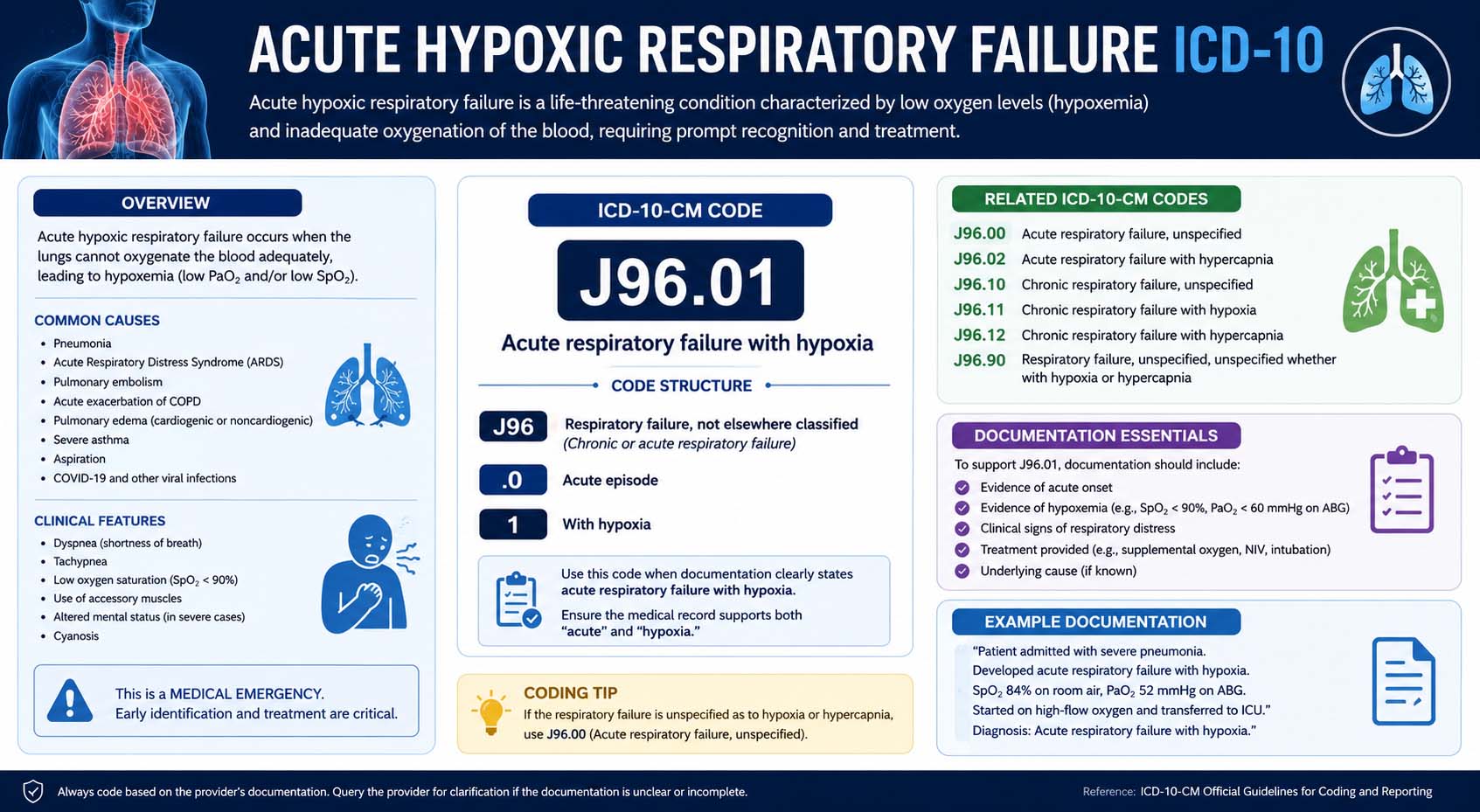
The respiratory failure ICD 10 code helps healthcare professionals classify respiratory failure and maintain accurate medical records. In the US ICD-10-CM system, J96.01 represents acute respiratory failure with hypoxia. Accurate documentation helps medical coders assign the appropriate diagnosis code and supports reliable healthcare reporting.
Medical coders, healthcare administrators, and students can benefit from understanding this condition, its common causes, and its documentation requirements. This guide covers the relevant code, warning signs, treatment approaches, and essential coding considerations.
Respiratory Failure ICD 10: Understanding the Diagnosis
The ICD-10-CM code J96.01 describes acute respiratory failure with hypoxia. Hypoxia means that body tissues do not receive enough oxygen to meet their needs. During acute respiratory failure, the respiratory system cannot provide adequate oxygenation, remove carbon dioxide effectively, or both.
However, the specific code J96.01 identifies acute respiratory failure with hypoxia rather than every form of respiratory failure.
This condition can develop suddenly because of an infection, lung disease, injury, or another serious medical problem. For example, severe pneumonia can interfere with oxygen transfer from the lungs into the bloodstream. As a result, patients may need urgent medical assessment and respiratory support.
The ICD-10-CM system standardizes diagnosis classification in the United States. Healthcare facilities use these codes for medical records, reporting, and billing. For official coding information, consult the CMS ICD-10-CM code reference.
Causes and Symptoms of Acute Respiratory Failure
Several medical conditions can interfere with oxygen exchange in the lungs. Identifying the underlying cause helps clinicians select appropriate treatment.
Common causes include:
- Pneumonia: This infection can inflame lung tissue and fill air sacs with fluid, reducing oxygen transfer.
- Chronic obstructive pulmonary disease (COPD): A severe exacerbation can worsen breathing and oxygenation.
- Viral respiratory infections: Some infections cause lung inflammation and interfere with oxygen exchange.
- Pulmonary embolism: A blood clot in the lungs can disrupt blood flow and oxygenation.
- Severe asthma: Significant airway narrowing can make effective breathing difficult.
- Sepsis: A severe response to infection can contribute to respiratory dysfunction.
- Heart failure: Fluid accumulation in the lungs can impair oxygen exchange.
- Acute respiratory distress syndrome (ARDS): Severe lung injury can cause substantial oxygenation problems.
Symptoms vary according to the cause and severity. However, warning signs may include:
- Shortness of breath
- Rapid or labored breathing
- Confusion or unusual drowsiness
- Bluish discoloration of the lips or skin
- Chest discomfort
- Severe fatigue
- Low oxygen saturation
Respiratory symptoms can have different causes. Readers may also find information about how to stop wheezing useful when learning about breathing difficulties. Similarly, pain under right breast can have several explanations, including chest or respiratory conditions.
Seek emergency medical care for severe breathing difficulty, blue lips, new confusion, or other signs of serious oxygen deprivation. Online information cannot replace professional assessment for a potentially life-threatening condition.
Respiratory Failure ICD 10 Documentation Guidelines
Accurate coding depends on clear clinical documentation. Healthcare providers should document the diagnosis, its acuity, and the presence of hypoxia. Medical coders must review the record and apply the relevant official coding guidelines.
Useful documentation may include:
- The physician’s diagnosis of acute respiratory failure with hypoxia
- Relevant oxygen saturation measurements
- Arterial blood gas results, when available
- Clinical findings that support the diagnosis
- Respiratory support and treatment provided
- Underlying conditions that contribute to respiratory failure
For example, a patient may have both pneumonia and acute respiratory failure with hypoxia. In that situation, the medical record should clearly identify both conditions. Coders must also follow applicable guidelines when determining code assignment and sequencing.
Clinical indicators help explain a patient’s condition. However, coders should not independently establish a diagnosis solely from laboratory results, oxygen readings, or treatment details. Instead, they should follow applicable coding rules and seek clarification from the treating provider when documentation lacks sufficient detail.
Careful documentation supports consistent coding and helps reduce avoidable claim denials. In addition, it improves communication between healthcare professionals and billing teams.
Treatment for Acute Respiratory Failure With Hypoxia
Treatment depends on the severity of respiratory failure, the patient’s overall condition, and the underlying cause. Because acute respiratory failure can become life-threatening, clinicians must assess and manage it promptly.
Oxygen Therapy and Respiratory Support
First, clinicians assess the patient’s breathing and oxygenation. They may provide supplemental oxygen to improve blood oxygen levels. Meanwhile, they monitor the patient’s response and adjust respiratory support as needed.
Some patients require high-flow oxygen or noninvasive ventilation, such as CPAP or BiPAP. In severe cases, clinicians may use mechanical ventilation to support breathing.
Treating the Underlying Cause of Respiratory Failure
The care team also treats the condition that triggered respiratory failure. For example, clinicians may prescribe antibiotics for a bacterial infection or bronchodilators for certain asthma or COPD exacerbations. Other conditions may require different medications or procedures.
Treatment must match the patient’s diagnosis and clinical needs. Therefore, no single medication or respiratory support method works for every patient.
Monitoring and Ongoing Care
Patients with severe respiratory failure may require intensive care. Clinicians monitor oxygenation, breathing effort, vital signs, and treatment response. They also reassess the underlying condition and adjust the care plan as the patient’s health changes.
Why Accurate Respiratory Failure ICD 10 Coding Matters
Accurate diagnosis coding supports communication, billing, and healthcare reporting. The correct code helps distinguish acute respiratory failure with hypoxia from other respiratory diagnoses.
Healthcare organizations also use coded information for administrative reporting and analysis. Consequently, coding errors can create claim-processing problems, inaccurate records, or compliance concerns.
Medical coders should review the complete medical record rather than relying on a single symptom or test result. For example, clinicians may perform a head to toe assessment to evaluate respiratory distress alongside other clinical findings.
However, a physical assessment alone does not determine the appropriate diagnosis code. Coders must consider the provider’s documented diagnosis and follow applicable coding guidelines. When documentation conflicts or leaves important details unclear, clarification may be necessary.
Frequently Asked Questions About Respiratory Failure ICD 10
What Is the ICD-10-CM Code for Acute Respiratory Failure With Hypoxia?
The code is J96.01. It represents acute respiratory failure with hypoxia in the US ICD-10-CM classification.
What Causes Acute Hypoxic Respiratory Failure?
Common causes include pneumonia, severe respiratory infections, COPD exacerbations, pulmonary embolism, heart failure, and acute respiratory distress syndrome. The specific cause varies by patient.
How Do Healthcare Providers Treat Acute Respiratory Failure?
Treatment may involve supplemental oxygen, noninvasive ventilation, mechanical ventilation, and medications or procedures to address the underlying cause. Clinicians select the appropriate approach based on the patient’s condition.
Why Does Accurate ICD-10 Coding Matter?
Accurate coding supports medical documentation, insurance claim processing, healthcare reporting, and compliance with applicable coding requirements.
Conclusion: Understanding Respiratory Failure Diagnosis Codes
The ICD-10-CM code J96.01 represents acute respiratory failure with hypoxia. Accurate code assignment requires clear clinical documentation, careful review of the medical record, and compliance with applicable coding guidelines.
Understanding the condition’s causes, symptoms, treatment approaches, and documentation requirements helps medical coders and healthcare professionals maintain accurate records. Appropriate code assignment also supports reliable healthcare reporting and consistent claim processing.